India’s missile technology and drone capabilities are set to rival its growing list of rivals
China’s PL-17 beyond visual-range air-to-air missile, which is said to have the ability to target aircrafts at an extremely long range, along with other long-range missiles and aircraft defense systems such as the S-400 in Russia, present a serious threat to aircrafts.
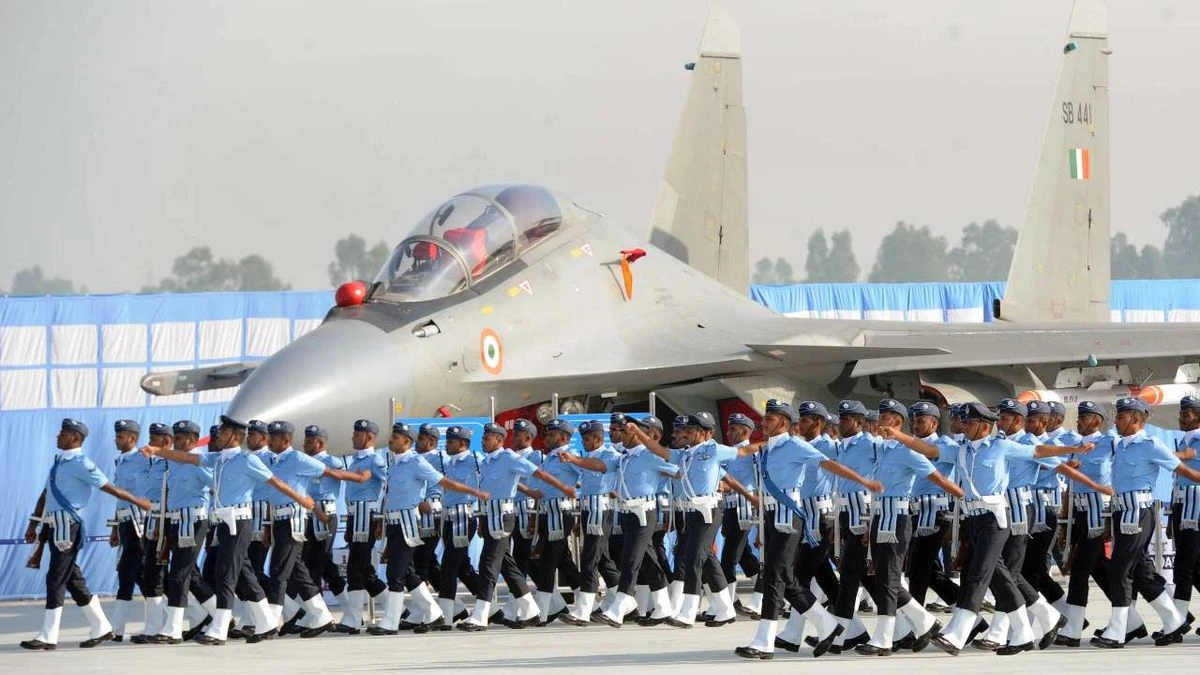
India’s fighter aircraft squadron strength will soon be overtaken by its growing missile technology and drone capabilities
Recently, conflicts have shown the extent of damage drones, cruise missiles, ballistic missiles and other stand-off weapons can cause. Iran’s use of unmanned aerial vehicles and missiles in the conflict between Iran and the US has resulted in attacks on US infrastructure through the use of these relatively cheap weapons. With attacks on tankers, oil rigs, and satellites by the Houthi rebels in Saudi Arabia, the vulnerability of these critical assets to aerial threats is well known. Ukraine has joined the fray in using drones to attack the energy infrastructure of Russia.
India should focus on its missile and drone capabilities to strike China’s and Pakistan’s critical infrastructure
India’s investment in its missile defense and strike system and drone capabilities can prove to be more strategic than fighters’ jets in case of a conflict with China or Pakistan. India announced its procurement of Russian Rvv-Bd air-to-air missiles for its Sukhoi Su-30MKI multirole fighters.
India is also working on the Astra Mk-II and Astra Mk-III missiles which have the ability to strike targets beyond visual range and enhance India’s long-range targeting capabilities. India has also ordered 31 MQ-9B Predator drones from the US, which will start arriving in 2028-29. However, the extent to which these drones can penetrate enemy airspace will be determined by the threats they face and the assets that can be mustered to counter them.
India needs to invest in its ballistic missile programme to counter threats from Pakistan and China
India’s need to develop its ballistic missile programme is dire as Pakistan continues to acquire high technology missiles and drones. China, too, is in the process of upgrading its ballistic missile programme. India’s strategic triad of nuclear deterrence currently consists of the Prithvi-II, Agni-I, Agni-II, Agni-III and Agni-V. In order to counter Chinese and Pakistani missile technology and provide an effective retaliatory strike, India has the option of relying on its supersonic aircrafts or long-range stand-off missiles such as the BrahMos.
India needs to develop its fighter aircraft squadron strength in order to maintain air superiority
Although India’s need to develop its ballistic missile programme and drone capabilities is undeniable, India cannot do away with its aircraft carriers. Fighters’ jets, such as the MiG-21, can provide air superiority, intercept enemy aircrafts, provide reconnaissance support, surveillance and even carry out ground attacks. India’s defense budget should be allocated towards the development of its aircraft carriers, layered ballistic missile defense system, drone capabilities, guided missiles and enough interceptor planes to provide air defense and protect vital assets.