Justice Yashwant Varma Found Guilty in Cash-at-Home Case
Lok Sabha inquiry panel finds all charges against Justice Yashwant Varma proved in the cash-at-home case, calling his explanation evasive and misleading.
Rahul VarunVerified Public Figure • 30 Apr, 2026Editor
calendar_today Aug 12, 2026schedule 4:58 PMchat_bubble 0
P
Politics
NEWS CARD
“Justice Yashwant Varma Found Guilty in Cash-at-Home Case”
Read more onattentionindia.com/s/90a982
12 Aug 2026
https://attentionindia.com/s/90a982
Copied
Pinterest/@bravemanz
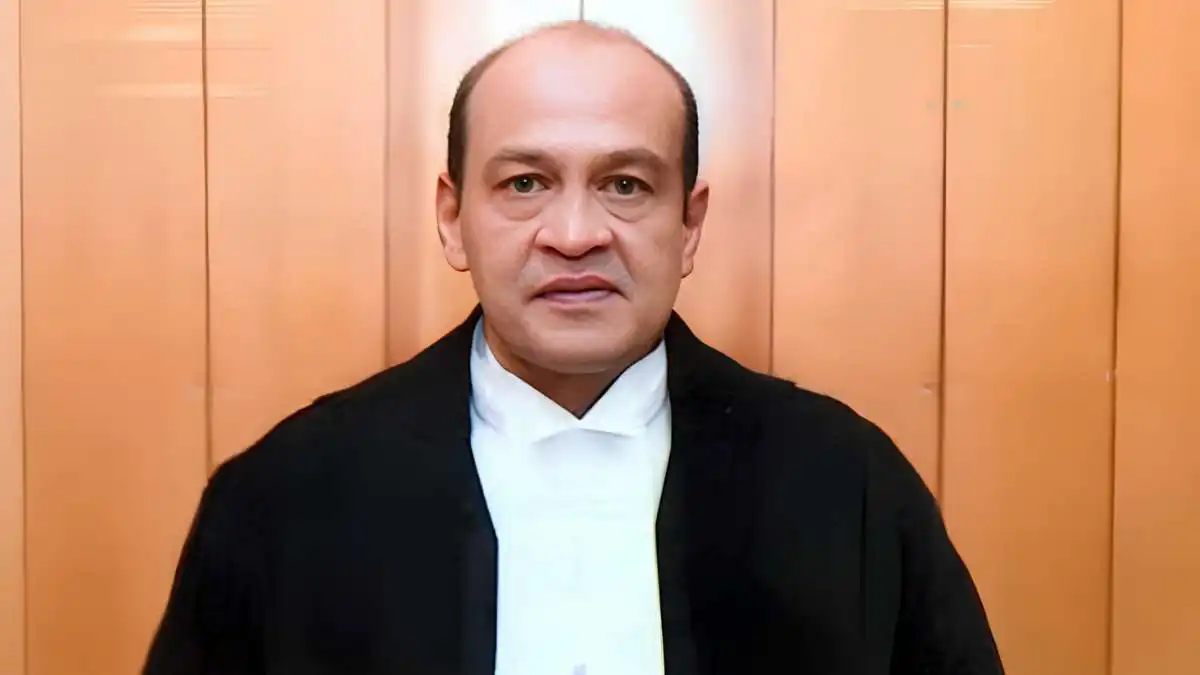
Justice Yashwant Varma found guilty in Cash-at-Home case
A three-member inquiry committee investigating allegations against former Allahabad High Court judge Justice Yashwant Varma has found all three charges against him to be proved in the controversial cash-at-home case.
The committee looked at the discovery of a huge amount of unaccounted currency at Justice Varma's official residence in Delhi after a fire on March 14, 2025. In its 126-page report, the panel said his explanation about the cash was “evasive” and “misleading”.
The inquiry report was tabled on Wednesday in both Houses of Parliament and has brought the high-profile case front and centre again.
Get Featured Today!
Get featured your news, press release, success story and more on Attention India. You can feature on Magazine, Article, Social Media Post, Biography and more.
Panel Says Cash Was Found Inside Official Premises
The committee said the evidence clearly established the presence of a substantial amount of currency notes in Justice Varma's official residence.
But the panel did not directly conclude that the cash personally belonged to Justice Varma. It concluded that there was not enough significant evidence to establish his personal ownership of the money.
However, the committee rejected his defense that he had no knowledge of the currency and was not responsible for what happened after it was discovered.
The evidence raised serious concerns, the report said, namely the amount of money, the insufficient explanation and failure to preserve the material after it was found.
The panel said the overall evidence was not successfully challenged by Justice Varma's defence.
First Charge Proved: Connection With the Storeroom
One of Justice Varma's main arguments was that the storeroom where the cash was found was not under his control.
The inquiry committee rejected this explanation.
There was evidence made available in the room, including a locked cabinet which had, according to the documents, been filled with Justice Varma's personal belongings. Based on the circumstances and evidence gathered during the inquiry, the panel found that there was a sufficient connection between the judge and the site where the currency was discovered.
As a result, the committee proved the first article of charge.
The panel consisted of Supreme Court judge Justice Aravind Kumar, former Bombay High Court Chief Justice Shrikrishna Chandrashekhar, who was later elevated to the Supreme Court, and senior advocate BV Acharya.
The second charge was for failing to preserve evidence.
The committee also raised very serious questions about what happened to the burnt currency after the fire.
It said the cash and other material evidence should have been properly preserved after its discovery.
The panel did not find evidence that Justice Varma himself physically removed the currency. But it held that he had a duty to ensure that important evidence from premises under his institutional control was preserved.
The committee also looked at the role of people connected with Justice Varma's household and official establishment in handling the storeroom and the currency.
Based on the results, the panel held the second article of charge proved.
Even without any evidence that Justice Varma personally removed the cash, poor preservation of crucial material remained a serious issue, the report said.
Committee Calls Varma's Explanation 'Evasive'
The inquiry panel was particularly critical of Justice Varma's statements during the investigation.
The committee also considered his initial claim that he had no knowledge of the currency. It also looked into his later allegations that the cash may have been planted as part of a conspiracy and his issues of collection and storage of evidence.
But the committee concluded that these explanations were not quite enough to explain why the large amount of cash was found inside the official premises.
The report said the defence of Justice Varma did not sufficiently supersede the evidence before the inquiry committee.
It also drew an adverse inference from his decision not to enter the witness box and face cross-examination during the proceedings.
According to the committee, parts of his defence were found to be false and his entire explanation was found to be misleading, and his whole explanation was described as evasive and misleading.
The third article of charge was also proved.
How did the Justice Yashwant Varma Cash Case Begin?
The controversy began after a fire broke out in Justice Yashwant Varma's official residence in Delhi on March 14, 2025.
In the aftermath of the fire, large quantities of currency notes were found in the premises, and serious questions and a major judicial inquiry were raised.
Then Chief Justice of India Sanjiv Khanna ordered an earlier in-house inquiry after the controversy came to light.
That inquiry, it is said, found Justice Varma’s explanation unsatisfactory.
After hearing about the results, CJI Khanna asked him to resign or face the constitutional process for removal from judicial office.
Justice Varma did not resign at that stage, and the matter was subsequently forwarded to the President and the Prime Minister.
Parliamentary Inquiry Followed
The case later moved into the parliamentary process.
A motion seeking action against Justice Varma was admitted in Lok Sabha, and then a statutory three-member inquiry committee was set up to investigate the allegations.
The latest committee report has now found all three charges against him proved.
However, there was a major development while the parliamentary inquiry was still going on.Justice Yashwant Varma resigned from the judicial office on April 9, 2026.
His resignation has brought into question what will happen to Parliament and will it carry on investigating or taking further action based on the findings of the inquiry report?
What happens from now on?
Now the inquiry report has been tabled in Parliament, the future of the case is uncertain.
The committee's findings indicate that all three articles of charge against Justice Varma were proved. The report did not, however, definitively establish that the currency belonged to him personally.
Now the big question is how could the parliamentary process proceed now that he has resigned as chief judge?
The Parliament will consider the legal and constitutional implications of the report and decide whether any further action is possible.
For now, the Justice Yashwant Varma cash-at-home case remains one of the most significant judicial controversies in recent times, with the parliamentary inquiry panel strongly criticising his explanation and holding all three charges against him proved.
Rahul VarunVerified Public Figure • 30 Apr, 2026Editor
Rahul Varun is an Editor at Attention India, contributing to the development and publication of engaging news and feature stories. He focuses on clear storytelling, editorial quality, and presenting information in an accessible and reader-friendly manner.