New Delhi (India) March 14:In a recent statement, U.S. President Donald Trump revealed that the military has launched strikes on military sites located on Iran’s Kharg Island. He cautioned that if Iran continues to obstruct shipping through the Strait of Hormuz, which is crucial for global oil transportation, the region’s key oil facilities might be next in line to be targeted. In response, Iran issued a stern warning on Saturday, threatening to turn its oil facilities connected to the United States into “a pile of ashes” if any of their oil infrastructure were attacked. The conflict, which has now entered its third week, has escalated into a global oil price crisis that was already intensifying.
Trump emphasized that U.S. forces had “obliterated” military installations on Kharg Island, a vital hub for Iran’s oil exports . While the recent attacks didn’t directly hit the oil infrastructure, the president made it clear that if Iran disrupts shipping in the Strait of Hormuz—one of the world’s most critical energy passageways—further strikes could follow.
Get Featured Today!
Get featured your news, press release, success story and more on Attention India. You can feature on Magazine, Article, Social Media Post, Biography and more.
“Our Weapons are the most powerful and sophisticated that the World has ever known but, for reasons of decency, I have chosen NOT to wipe out the Oil Infrastructure on the Island. However, should Iran, or anyone else, do anything to interfere with the Free and Safe Passage of Ships through the Strait of Hormuz, I will immediately reconsider this decision," Trump said. "There is nothing they can do about it! Iran will NEVER have a nuclear weapon, nor will it have the ability to threaten the United States of America, the Middle East or, for that matter, the World! Iran's Military, and all others involved with this Terrorist Regime, would be wise to lay down their arms, and save what's left of their country, which isn't much," he added.
Hub for Iran's Massive Oil Exports
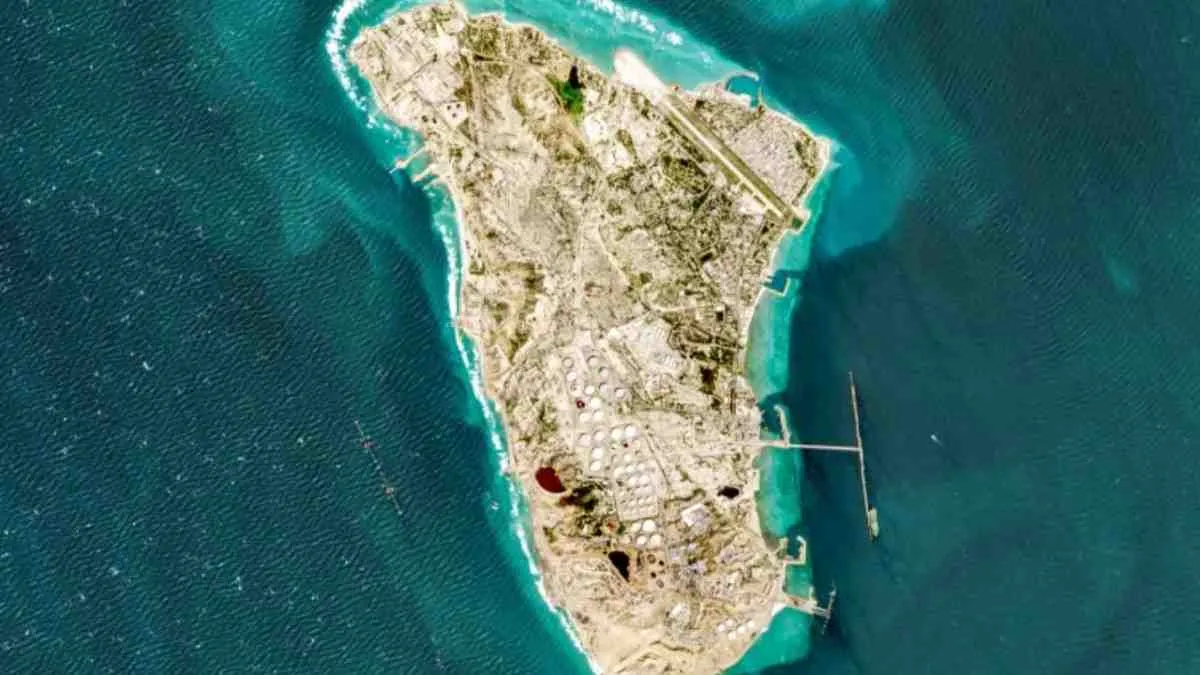
Kharg Island has long been known as Iran’s economic lifeline. Analysts warn that continued assaults on this territory could severely impact the country's oil exports and overall economy. Over the years, Iran has developed Kharg into one of the largest oil terminals globally. Although it has the capacity to handle around seven million barrels of oil per day, current exports are only about 1.6 million barrels daily.
Kharg: Iran's Oil Lifeline
Located about 30 kilometers off the Iranian coast in the Persian Gulf, near the port city of Bushehr, Kharg Island is relatively small—just 8 kilometers long—but it plays a disproportionately large role in Iran’s economy. Often referred to as Iran’s “oil lifeline,” Kharg manages approximately 90 percent of the nation’s crude exports. Oil from some of Iran’s largest offshore fields, such as Aboozar, Forouzan, and Dorood, is transported via subsea pipelines to the island for storage before being loaded onto massive tankers bound for Asia.
favorite
Follow us for the latest updates:
Author
Attention IndiaVerified Public Figure • 02 May, 2026Chief Editor
Attention India is an independent digital publication covering news, current affairs, entertainment, lifestyle, and stories of public interest. The editorial team focuses on delivering accurate, informative, and engaging content while maintaining high standards of journalism and editorial integrity.