Supreme Court draws a New Line between Safety and Freedom

Supreme Court recognises internet access as a fundamental rifgt for children, rejecting blanket age - based bans allowing proportionate online safety measures.

Rahul Varun
Rahul Varun Verified Public Figure Editor
Oct 17, 2026 3:50 PM 0
I
India
NEWS CARD
Logo
Supreme Court draws a New Line between Safety and Freedom
“Supreme Court draws a New Line between Safety and Freedom”

Favicon
Read more on attentionindia.com/s/5a886e
17 Oct 2026
https://attentionindia.com/s/5a886e
Copied
Supreme Court draws a New Line between Safety and Freedom
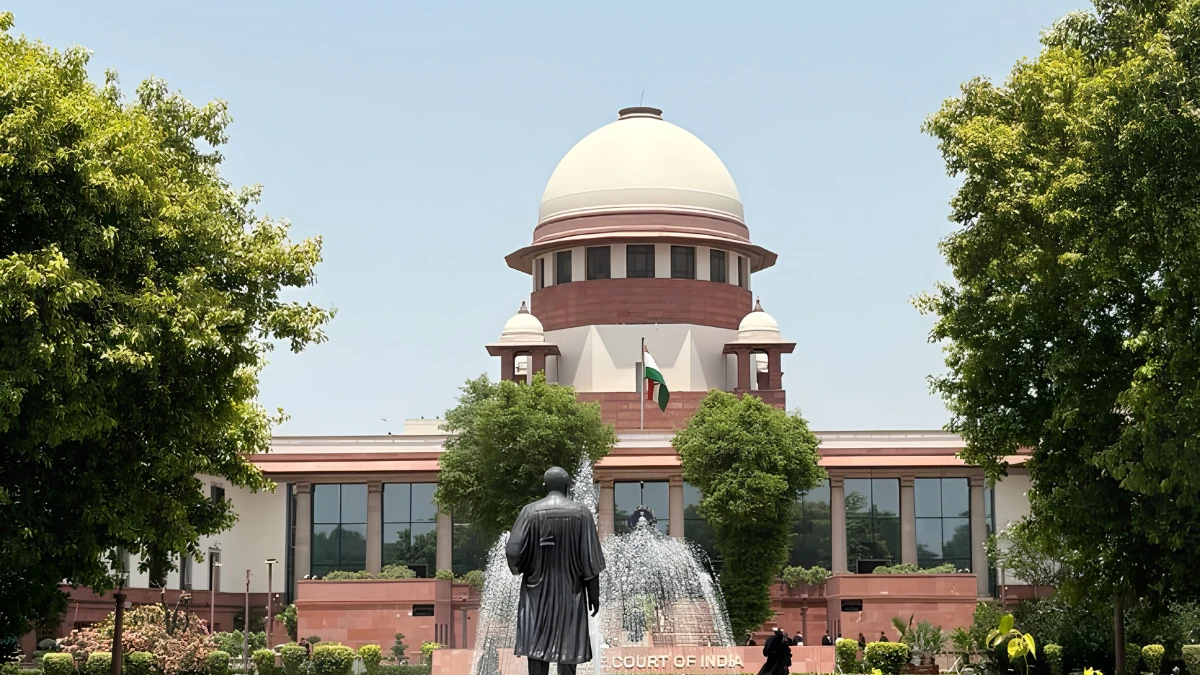
Supreme Court of India

The Supreme Court on October 15, 2026, ruled that blanket age restrictions to access the internet cannot be imposed on children, and that their right to access the internet is a fundamental right. The court stated that protecting children from being harassed or exploited online cannot be done by restricting their right to Internet access and that steps should be taken to ensure that their freedom of expression and right to access information is not compromised.

A Bench of Justices J.B. Pardiwala and K. Vinod Chandran delivered the judgment while giving directions to take necessary steps to detect and remove child sexual exploitation and abuse material (CSEAM) from the internet.

Why the Court Was Against Blanket Restrictions

The Bench noted that Internet access is a fundamental right, under Articles 21 and 19(1)(a) of the Constitution, and said that the safety of children and their right to access information cannot be compromised.

Get Featured Today!

Get featured your news, press release, success story and more on Attention India. You can feature on Magazine, Article, Social Media Post, Biography and more.

Get it Now

“The safety of our children and their freedom are not at cross purposes. Our children are entitled to both,” the court said. The Bench noted that Internet access gives children educational resources, information, and an outlet for their creative expression, and can help integrate them into the mainstream.

“It is more so necessary for children in rural areas and those with physical disabilities,” the court added. The Bench also pointed out that blanket restrictions may not be an effective way of protecting children.

“The imposition of such restrictions will be counterproductive as it will drive children to inaccessible platforms,” the Bench said.

Online Safety Cannot Come at the Cost of Children’s Rights

Further, the Bench voiced concern that technologies to impose such restrictions may end up collecting sensitive personal information of children.

“There is also an apprehension that such a system will lead to invasion of their privacy and space,” it added. Furthermore, the Bench said, children who are threatened, harassed, lured or exploited online may be deterred from reporting such incidents due to fear of being punished for violating Internet usage norms.

“Rather than cutting off access to all platforms of Internet, the onus is on the platforms to take responsibility, ensure necessary safeguards and speedy removal of such content,” the Bench said.

What Safeguards Can Be Enforced?

The judgment does not prohibit states from taking reasonable measures to protect children from being harassed or exploited online. The Bench said parental consent, guidance, and supervision, and the use of child-friendly interfaces could be ways in which children could be protected.

“Accounts could be made ‘private-by-default’ and children could be discouraged from communicating with unknown adults and could be advised to report such communications,” the Bench said. It also suggested that steps could be taken to restrict access to sites that facilitate sexual exploitation and abuse, such as child pornography sites.

Citing Past Digital Rights Landmark Verdicts

The ruling follows the Anuradha Bhasin v Union of India verdict (2020) and the Pragya Prasun v Union of India verdict (2025) by the Supreme Court concerning digital rights. By striking down blanket restrictions and voicing support – while recommending precautions – for children accessing the Internet, the Supreme Court has delineated a new path for digital rights in India.

favorite Follow us for the latest updates:
Author
Rahul Varun

Rahul Varun Verified Public Figure Editor

Rahul Varun is an Editor at Attention India, contributing to the development and publication of engaging news and feature stories. He focuses on clear storytelling, editorial quality, and presenting information in an accessible and reader-friendly manner.


history Digital Archives

View Full Library chevron_right

Follow Us

keyboard_arrow_up
podcasts Podcast amp_stories Web Stories local_fire_department Trending person_book Biography mark_email_unread Newsletter