The Global Family Office Model: Key Lessons for Emerging Economies from Soumik Bandyopadhyay
 PR Spot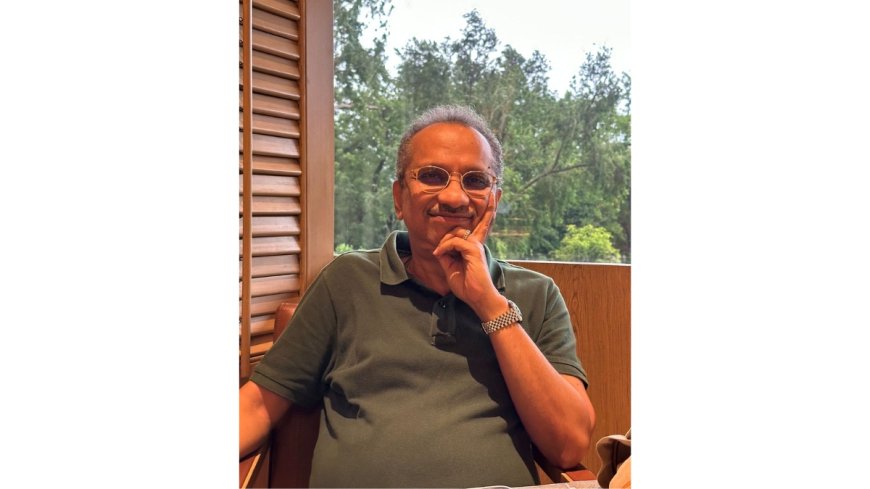
New Delhi [India], January 8: As private wealth grows in emerging economies, families are facing questions that go well beyond the performance of investment decisions. What happens to wealth once it surpasses the creator? How do families manage their personal dynamics so that they don’t leak into the business? And how does wealth stay relevant to generations that have grown up in vastly different environments? These are the questions that underpin Soumik Bandyopadhyay’s work with business families everywhere in India and beyond. Drawing on decades of finance and governance and family enterprise experience, he sees the global family office model as a practical response to complexity rather than a measure of grandness. In larger economies, family offices have transformed into institutions created for continuity, regularity, and long-term clarity. It provides new lessons for emerging markets that are harder and harder to ignore. THE FAMILY OFFICE AS Continuity Device.
Family offices are designed with continuity as the dominant goal in developed markets. They are not set up to focus on bottom lines or quarterly targets, but to facilitate the transmission of wealth, accountability and moral decisions from one generation to the next. This model differs from the way wealth is commonly handled in emerging economies, where wealth can result from rapid entrepreneurial achievement with little in the way of institutional development. And Soumik Bandyopadhyay often notes that continuity doesn’t necessarily follow size of wealth. It demands intentional scaffolding to separate family wealth and running businesses and insulate it from market turbulence and personal strain. Professionalisation v/s Simplicity. A feature of global family office is professionalising the office. In most established systems, family offices are staffed by people whose sole responsibility is managing wealth, risk, and governance. These positions are not so much related to running the business as separate from it.
There is a great deal of difference between the managerial and operational team roles among different levels in global family office. In less developed countries, family offices are more likely to serve as appendages to the main line, as senior management or trusted insiders carry wealth in conjunction with other affairs. This may feel like an easy operation, but it comes with conflicting incentives. Business leaders are incentivized to grow and take risks; family offices are charged with preserving, stabilising. The global model makes clear why by separating these functions such clearer judgment is achieved and long-term negative results reduced. Governance as a Practical Instrument: The global family offices governance framework is not about conformance and the rule of law. It is about clarity. Documented frameworks specify how decisions will be made, who participates and how any disagreements will be addressed. This means that institution cannot depend on one person’s authority and allow for function when leader change takes place. In an emerging economy, governance tends to be informal and personality type. Soumik Bandyopadhyay notes that this method can be limited to an extent. Informalism may lead to uncertainty as families grow and wealth becomes increasingly diversified. Formal governance introduced with thoughtfulness enables families to negotiate complexity without making every decision into a personal negotiation. Structured Communication, Not Escalations of emotion.
Global family offices consider communication to be a process — not an add-on. Frequent family meetings and gatherings, clear reporting, transparent reporting and formalised communities, such as the family meeting and forums, help make sure families are kept informed and on the same page. Topics of succession, risk and asset management, risk exposure and management are dealt with early and not before crises occur. In much of the country, communication between family members in emerging economies, family is typically informal and of the emotional type, rather than of professional communication. While closeness is a strength, the absence of structure can easily generate uneasiness and misalignment. The model demonstrates that structure can neither weaken relationships nor weaken them. Instead, it does nothing but allow difficult conversations to quietly but constructively take place. A More Broad Perspective of Risk And in a global family office context, risk is understood much broader than just the movement of the stock market.
It ranges from concentration risk to governance failures and reputational exposure to family disruption. This broader sense appreciates that wealth may be undermined as easily by breakdowns within as by external shocks. Risk-taking, especially among first-generation entrepreneurs, is often a celebration by emerging economies. Though this mindset drives growth, it can also leave family wealth vulnerable once control starts to change. According to Soumik Bandyopadhyay, a clear definition of risk tolerance is crucial. Ambition should not be cast off, but its role must be underpinned by safeguards around longer-term objectives. Adapting Global Models to Local Contexts
One of the biggest mistakes high-net-worth families make in developing economies is copying Western family office structures without adapting. The legal systems, norms, and family dynamics in countries across the globe differ greatly, and the direct imitation of these elements can lead to disparity. The approach of the global family office model works best as principles rather than a blueprint. Independence, professionalisation, governance and transparency could be modified to fit local circumstances. The point being is not to make family wealth management Westernized, but rather to reinforce it in a manner that respects the local setting even as it introduces discipline. Purpose as an Organising Principle
A growing number of global family offices now operate with articulated purpose. Wealth reflects values that impact decisions across generations, such as investment philosophy and design for governance and philanthropy. This focus is especially important for developing countries. Rapid wealth creation can far outrun clarity of purpose. Soumik Bandyopadhyay sees purpose as a stabilizing force that ensures families never become fragmented either through business change or asset restructuring. Purpose offers continuity regardless of form of wealth even as it evolves. Preparing Future Generations
Global family offices focus on developing future generation for responsibility. Education, exposure and step-by-step engagement are baked into the system. Successors are first provided understanding, before authority and context, before control. Leadership transition occurs generally too late or too quickly in developing economies. Founders may keep a hand-hold for decades or step away from their responsibilities, if not preparing adequately. The global model shows that continuity is much better when leadership development is framed as an ongoing process rather than something that one comes in for the first time. Philanthropy Is Structured and Intentional
Good philanthropy is “serious, not occasional,” in mature family office systems. It is organized, managed and consistent with family culture. This builds consistency and accountability as well as enables families to make a meaningful contribution beyond their businesses. For most of the developing world, philanthropy is done through compliance or ad-hoc opportunism or personal preference. The worldwide model underscores the importance of treating giving as an intentional extension of family commitment rather than the obligation unrelated to long-term objectives. Institutions That Endure
The international family office model gives developing economies a lesson in clarity. Wealth is fragile when it grows faster than the systems developed to oversee it. In fact, family offices succeed not because they are complex, but because they are intentional. Soumik Bandyopadhyay has long said that families who pay attention to structure and governance and provide clarity are better prepared for change. Professionalisation, disciplined communication and a clear purpose give wealth a way to serve generations rather than to encumber them. In emerging economies undergoing rapid private wealth creation, this is the next phase—not copying global models, but learning from them. If done right, the family office transcends a mere financial form. It becomes a lasting institution.