Trade Leap: From $12B to $30B by 2030
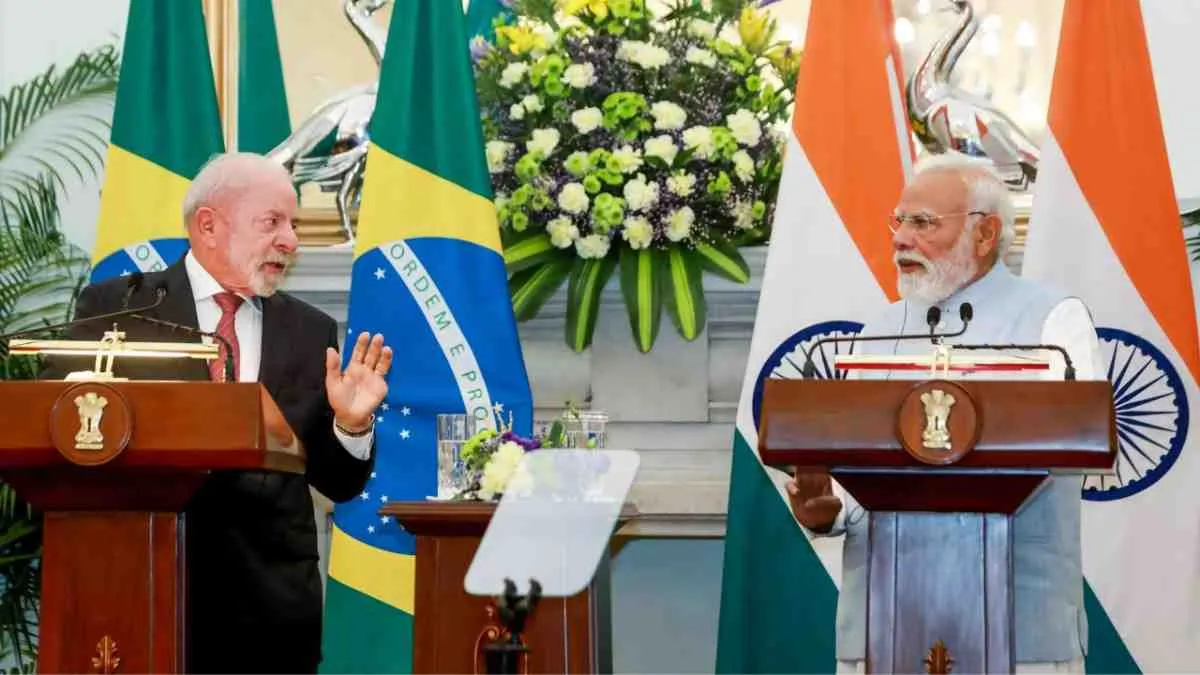
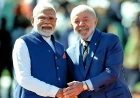
Modi and Lula concluded that bilateral trade should at least double to $30 billion by 2030. India (exports of $6.77 billion) and Brazil (imports of $5.43 billion) made up $12 billion in bilateral trade from 2024 to 2025.
“Brazil is India's largest trading partner in Latin America. We are committed to taking bilateral trade beyond USD 20 billion in the next five years. Our trade is not just a figure, it's a reflection of trust,” Modi said.
United on Terrorism, Global Reforms
Modi said India and Brazil have common global political perspectives in global governance and security challenges and that reform of international institutions is essential in addressing current global problems.
“We believe that every problem must be resolved through dialogue and diplomacy. India and Brazil are unanimous that terrorism and its supporters are enemies of all humanity,” he said.
9 Key Deals Signed in Minerals, Defense
After the talks, the two countries signed nine agreements, including cooperating in rare earth and critical minerals and a joint declaration on digital partnership. Memoranda of understanding were also signed in the fields of mining, MSMEs, healthcare and traditional knowledge systems.
The leaders pledged to bolster cooperation across defence, energy, healthcare and digital public infrastructure, and to deepen India-Brazil coordination to grapple with geopolitical uncertainties.
Defense Boost: Subs, Jets in Focus
The talks included defence cooperation and cooperation for French Scorpene submarines under an arrangement with Mazagon Dock Shipbuilders Limited and the Indian and Brazilian navies.
Brazilian aerospace group Embraer's proposal to set up an assembly line for its E175 regional jet in India and, as an add-on, a maintenance, repair and overhaul plant was also addressed.
Eye on US Tariffs: Close Monitoring
The two of them also touched on the US Supreme Court’s decision to invalidate reciprocal tariffs imposed by President Donald Trump during their wide-ranging talks in the capital. As Secretary (East) in the ministry of external affairs P Kumaran had said in office, the two sides had reviewed the direction of U.S. trade policy and agreed to the two sides’ close monitoring.
“Both leaders agreed that it is a rather new development that both sides need to study its implications and wait for further developments by the US administration,” he said.