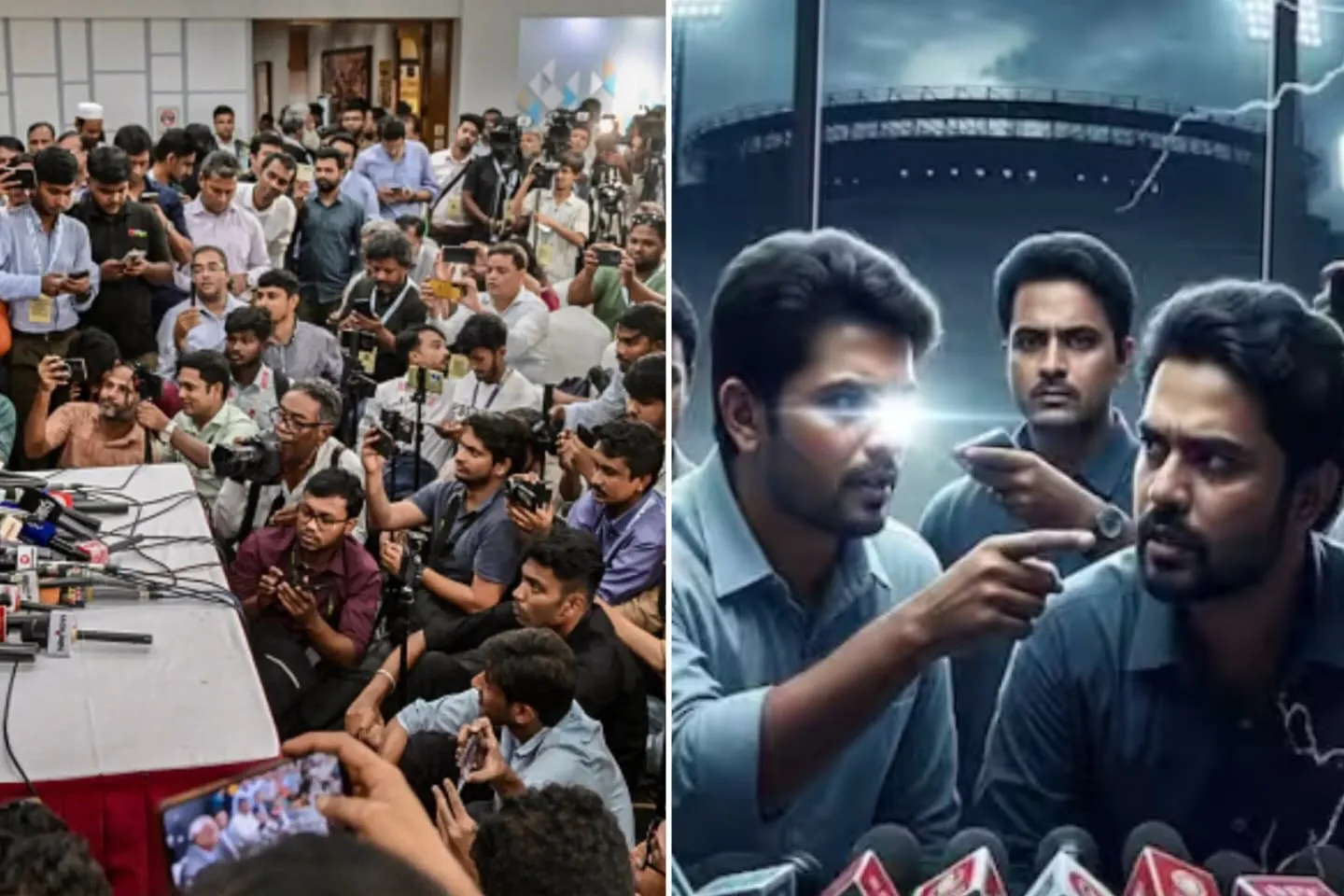
For almost three decades, Aapon Tariq, Sports Editor at Barta24. com, has spent nearly three decades covering cricket. His career as a journalist took off at the 1999 World Cup in England, a legendary tournament for Bangladesh, where the team won its first prominent international competition, beating Pakistan.Tariqhas previously been employed by many of the top Bangladeshi newspapers and websites, such as Bhorer Kagoj, Daily Amar Desh, bdnews24, Dainik Sokaler Khabar and DhakaPost. com. He has links with one of the nation’s top online news sites. However, before heading to India to take a second World Cup trip, Tariq received an unexpected turn of events. Upon posting his media accreditation application on December 25, expecting to be given an additional step in his career, he was horrified to find that his application was rejected.
“On January 26, I got an e-mail that said my accreditation application had been rejected,” Tariq told Hindustan Times. “Before that, I’d watched posts by my colleagues on social media that all accreditations had been cancelled. When I opened my inbox, I saw that those were among the people involved. The cancellation was confirmed in an automated email.” Tariq is among a group of over 100 Bangladeshi journalists whose requests for accreditation to cover the ICC Men’s T20 World Cup were rejected.
The decision came after Bangladesh’s controversial exit from the tournament. Though it is uncommon for a major team to be off during a global ICC event, its fallout has been felt in particular by journalists, leading to widespread disappointment within Bangladesh’s media community. Historically, journalists have not obstructed the coverage of ICC contests for failure to attend a team’s matches.
Get Featured Today!
Get featured your news, press release, success story and more on Attention India. You can feature on Magazine, Article, Social Media Post, Biography and more.
Bangladesh reporters have generally returned to World Cups in the past even where the nation’s team was absent. This time though, the usual norms seem to have been discarded. “Everybody is very disappointed,” Tariq said. “Bangladesh has played World Cups since 1999, and our senior journalists have been covering ICC events even before that. Cricket is hugely popular here — newspapers and television channels devote significant time to it.
He added that a colleague who has covered 12 ICC events told him this was the first time in his career that a World Cup accreditation had been denied. “He felt Bangladeshi journalists were effectively boycotted because Bangladesh boycotted the World Cup. That’s highly unusual. Even in past tournaments where Bangladesh didn’t participate, journalists were still allowed to cover the event. That’s why this episode has shocked and upset us.”
Lack of clarity from ICC
What has further aggravated the situation is the ICC’s silence. Despite repeated attempts by journalists to seek clarification, no official explanation has been provided. Over his career, Tariq has covered numerous bilateral series and major ICC tournaments, including Bangladesh’s 2019 tour of India, the 2021 Men’s T20 World Cup in the UAE, and the 2022 edition in Australia.
“Many journalists wrote back asking for reasons, but there has been no response,” he said. “Even when contacted directly, the ICC media department did not reply. Some journalists are keen to cover matches in Sri Lanka, one of the co-hosts, even if they can’t travel to India.”
Rana Abbas, Sports Editor at Ajker Patrika and a veteran of five World Cups and four Asia Cups, is also among those affected. He had covered the 2023 World Cup in India. While Bangladesh Cricket Board media committee chairman Amzad Hossain estimated that around 150 journalists were denied accreditation, the actual figure could be higher.
“At the 2023 World Cup in India, around 80 Bangladeshi journalists covered the event,” Rana told HT. “This time, the number should have been higher, especially since many of Bangladesh’s matches were scheduled in Kolkata, close to the border. Yet most journalists didn’t receive approval. A few photographers were granted accreditation about a week ago, but it’s unclear if those approvals still stand.”
Rana said the rejections have left journalists shaken. “This is the first time we’ve experienced something like this. If I’m not mistaken, it may be the first instance where journalists from a specific country have been collectively denied accreditation at an ICC event. We believed that even if Bangladesh wasn’t playing, professional coverage would still be allowed.”
Nazmus Shakib, Sports In-Charge (Digital) at Kalbela and a journalist with 12 years of experience, believes the issue cannot be ignored. He feels Bangladeshi journalists were rejected solely due to their nationality.
“Bangladesh didn’t play in the 2013 Champions Trophy in England, yet our journalists covered it. The same goes for the FIFA World Cup—Bangladesh isn’t part of it, but our reporters still attend and report. So why single us out now?” he asked. “Even when Bangladesh isn’t playing, why are we treated this way?”
“Honestly, we feel it’s simply because we’re Bangladeshi. It didn’t affect just one or two people—it impacted many of us. And it hasn’t gone down well.”
One of the ICC’s key accreditation criteria is prior coverage of an ICC event. While this requirement was mandatory until the 2019 World Cup, it is no longer considered a strict prerequisite. With the 50-over World Cup scheduled next year and the Champions Trophy set for 2029, Tariq and Rana remain hopeful that this episode will not affect their future chances.
“Only time will tell,” Tariq said. “But journalists cannot lose their right to cover events. The mass rejection itself is striking. What was the harm in allowing Bangladeshi journalists to cover matches in co-host Sri Lanka?”
Rana echoed similar sentiments. “I don’t think this should affect my chances of covering future World Cups. It shouldn’t.”
Shakib, however, struck a more defiant note. “This isn’t something we’ll brush aside. We’re demanding a fair and transparent explanation.”
favorite
Follow us for the latest updates:
Author
Attention IndiaVerified Public Figure • 02 May, 2026Chief Editor
Attention India is an independent digital publication covering news, current affairs, entertainment, lifestyle, and stories of public interest. The editorial team focuses on delivering accurate, informative, and engaging content while maintaining high standards of journalism and editorial integrity.