Why the Mahabharata Should Be Read Beyond Popular Labels

Mukesh Kumar Singh urges readers to look beyond popular character labels and learn the moral lessons hidden in the Mahabharata and Ramayana.

Aadrika Tayal
Aadrika Tayal Official | Verified Expert • 02 May, 2026 Publisher
Sep 8, 2026 5:00 PM 0
P
Podcast
NEWS CARD
Logo
Why the Mahabharata Should Be Read Beyond Popular Labels
“Why the Mahabharata Should Be Read Beyond Popular Labels”

Favicon
Read more on attentionindia.com/s/7dac7a
8 Sep 2026
https://attentionindia.com/s/7dac7a
Google News
Copied
Why the Mahabharata Should Be Read Beyond Popular Labels
Image Credits- Pinterest

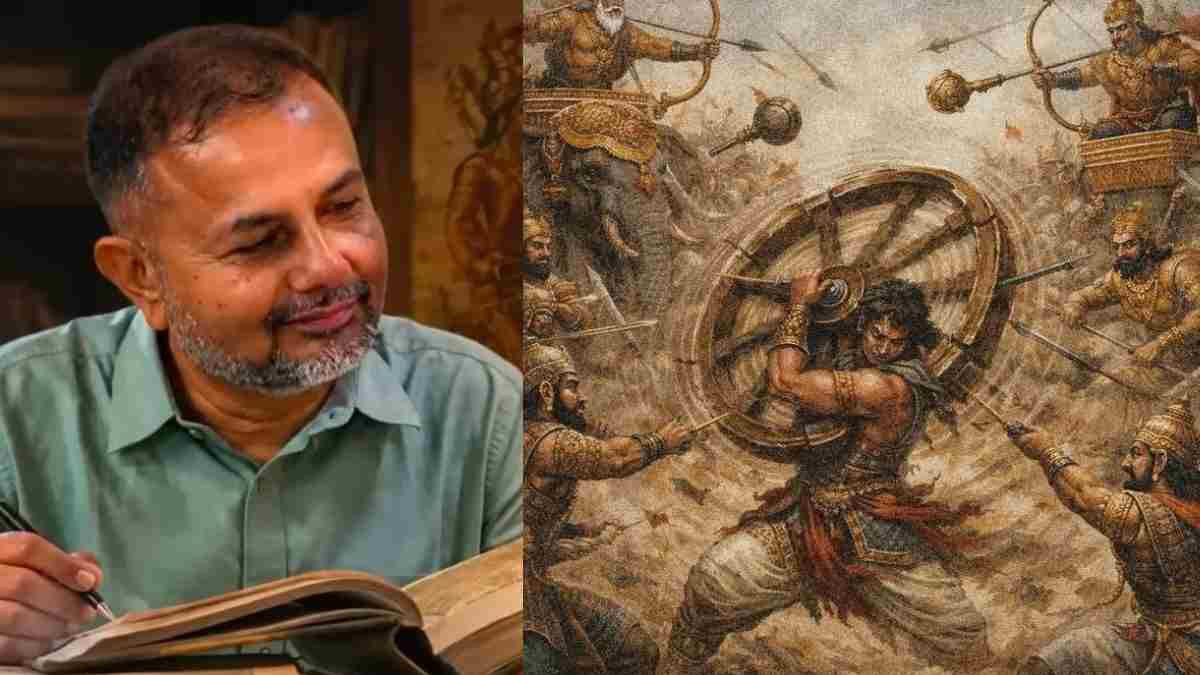
New Delhi (India) September 8: Mukesh Kumar Singh believes that characters from the Mahabharata and Ramayana are labeled in a superficial way and that Yudhishthira is mostly associated with gambling while the most significant attributes to his character are ignored.

He remarks on his character to have accepted his mistakes and follow his duties irrespective of suffering, humiliation and loss in life as well as how he treats the Kauravas as a family even after years of fighting each other. 

Singh relates instances where Yudhishthira has shown a humble side; one such example of him asserting his family ties of 105 brothers when seen together, irrespective of what we as individuals are can be drawn when Duryodhana was captured by the Gandharvas which according to him show that he rose above self-centred rage.

Get Featured Today!

Get featured your news, press release, success story and more on Attention India. You can feature on Magazine, Article, Social Media Post, Biography and more.

Get it Now

Comparing Yudhishthira and Karna in Mahabharata 

Singh compares Yudhishthira’s character with Karna’s actions. He says that even after Karna learned that the Pandavas were his brothers, he continued to insult some of them during the war.

He particularly refers to Karna’s treatment of Bhima and Yudhishthira. Singh also recalls that Yudhishthira later felt deep regret after learning that Karna was his elder brother and realizing that he had fought against his own brother. To him, incidents like this would explain why we should judge individuals through their complete actions and not according to images prevalent among the population.

Vibhishana and the Question of Dharma

Singh then considers Vibhishana in Ramayana, and opposes the popular definition of betraying his own people. He explains that Vibhishana was disowned by Ravana only after he opposed the latter. He chose dharma over kinship and friendship. He connects this situation to present day India when individuals seem to justify the wrongly done deed simply because a relative or friend has been associated with it. They, however, seem to miss the point of right being better than relationships.

Ravana’s Worship Does Not Erase His Actions

Singh stresses that prayer, devotion can not possibly wipe out unholy acts. An individual who prays all day but maltreats women in the night would, in normal circumstances be seen in accordance with his actions, and therefore one should apply the same standards to heroes and villains. In this manner, one's actions are far stronger indicators than a person's reputation or claim.

The Real Lessons of the Epics

According to Singh, the texts of Ramayana and Mahabharata have not been created solely for storytelling or debates regarding hero or villain, he adds that every incident carries with itself some sort of lesson to be derived in life. He points at how even Indra, Vayu and Surya also are depicted as prone to mistakes, therefore power/status and being divine does not immune individuals from the consequence of their misdeeds.

Learning Instead of Arguing

People tend to fixate on trivial arguments as to whether Karna was brave or not, whether Yudhishthira was gambler or great King and whether Ravana was devoted Shiva whereas according to Singh, there is more to these epics that these labels, and people have a tendency to ignore the underlying messages and lessons that they ought to convey. 

The texts were not written with an aim to leave a story for posterity alone but to leave behind certain messages and lessons to be learned by individuals from a certain experience or incident of a character-it is imperative to learn.

favorite Follow us for the latest updates:
Author
Aadrika Tayal

Aadrika Tayal Official | Verified Expert • 02 May, 2026 Publisher

Aadrika Tayal is a curious and research-driven writer who enjoys turning facts into simple and interesting stories. She has worked on articles covering politics, lifestyle, entertainment, sports, law, and international affairs. She is passionate about creating content that is clear, engaging, and meaningful.


history Digital Archives

View Full Library chevron_right

Follow Us

keyboard_arrow_up
podcasts Podcast amp_stories Web Stories local_fire_department Trending person_book Biography mark_email_unread Newsletter